Syntropic Core Reset
What if your body could hold itself up without you managing it?
Not through effort. Not through reminders. Not through exercises you have to do forever. Through restoring the internal pressure system your body was designed to run on. Four weeks. A daily practice you own. A body that stops fighting itself.
Scoliosis. Kyphosis. Chronic back pain. Postural compression. 4 weeks live with Sam Miller.
You correct your posture. It holds for a few minutes. Then you look down and you're right back where you started.
You stretch your hamstrings. They feel loose for an hour. By morning they're tight again.
You strengthen your back. Your core. Your glutes. The exercises feel right. But the pattern that put you in pain hasn't changed.
You've been told to stand taller. Sit straighter. Engage your core. Pull your shoulders back. And every single instruction fades the moment your attention moves to something else.
That is not a failure of effort. That is your nervous system running an old strategy that no amount of muscular work can override. Because the muscles are the output. Not the input.
"I correct my posture and then I just forget about it and that's it. I do a lot of sitting because I work as a developer and basically sometimes 10 hours on a chair and I need to fix it."Lena. S-curve scoliosis. Macedonia. Before the cohort.
"I did yoga for many years. Like a really long time but it didn't really help the daily tension and pain go away in a more permanent way. I feel like I've increased the awareness of my body so I can tell where my posture is compromised, but I don't yet have the tools or the path to make the changes."Laura. Scoliosis. Feldenkrais and Hanna Somatics background. Before the cohort.
"I've tried all sorts of different modalities, everything, you know chiropractor, acupuncture, physical therapy, stretching massage, all that and never really seemed to go away."Bill. Scoliosis since age 13. Jakarta. Before the cohort.
Your body runs a prediction. That prediction is your posture.
Your nervous system maintains an internal map of your body. Every millisecond, it uses that map to generate your posture automatically. Without your input. Without your awareness.
When that map says "brace here," the body braces. When it says "compress there," the body compresses. You can override it with effort. It holds for as long as you're paying attention. The moment attention moves, the old prediction resumes.
Every approach you've tried works on the output. The position. The muscle. The alignment.
The Syntropic Core Reset works on the prediction.
When the prediction changes, the body reorganizes on its own. Not because you forced it. Because the map updated.
"It just sort of like aligns. Like I can feel myself aligning out of the scoliosis that I usually feel. I have some familiarity with the Schroth breathing. And so usually that's like breathing into this like concrete back here. And it usually feels so like making such an effort. Like I'm blowing up this balloon and it's like really hard. And so this instead, like the Manta Breath was just focusing on that part of the diaphragm that usually for me is like this. Just feels really collapsed my lower left ribs. And then with the pressure, I was able to actually feel the imbalances in the pelvis. And for the first time. And so that was like amazing to feel like the pressure aligning my pelvis. Because with the pressure, it sort of just found the place where it wanted to be."Laura. Week 2. First time feeling pelvic alignment through pressure.
You don't force a new posture. You restore the conditions that make the old one unnecessary.
-
1.
You learn to listen before you move. Your body is sending signals all day long. Most of them are below your awareness. The first step is turning up the volume on those signals. Feet. Breath. Eyes. Jaw. When these systems come online, the nervous system stops bracing. Not because you told it to. Because it finally has the data it was missing.
-
2.
You restore internal pressure. Your torso is a pressure canister. Diaphragm on top, pelvic floor on bottom, abdominal wall around. When that canister is pressurized, your spine is supported from the inside. Not by muscle. By pressure. When it's not pressurized, your body compensates with tension, bracing, and compression. This is the missing piece in almost every posture program.
-
3.
You find your edge and practice there. The edge is where your body's map runs out of data. Where the movement gets choppy, where the breath sputters, where you start to grip. That boundary is where the real work happens. Not pushing through it. Listening at it. The map expands from the edge inward.
"I usually did it with forcing myself, but since you suggested that I don't, it's actually easier. It's getting easier and easier for me to breathe."Lena. Week 4.

85 degrees. No surgery. What changed it.
I was diagnosed with an 85-degree kyphoscoliosis at 13. At 18 I sat across from an orthopedic surgeon who told me I wasn't a candidate for surgery. I was functioning. I was mobile. The pain was something I learned to mute.
At 33, everything collapsed. Eight months unable to function. Fatigue. Digestive shutdown. The whole system going offline.
I spent those months searching. What I found changed everything. The pattern I'd been compensating around for two decades began to reorganize. Not because I found the right exercise. Because I finally addressed the right layer.
I recently published a research paper synthesizing seven disciplines that don't normally talk to each other. Genetics. Proprioception. Predictive coding. Body schema research. The conclusion: scoliosis isn't a bone problem. It's generated by the nervous system's predictive model operating on degraded sensory input. The spine is the printout. Not the problem.
What I teach comes from a 20-year clinical experiment with my own body. This is not theory. It is what changed it.
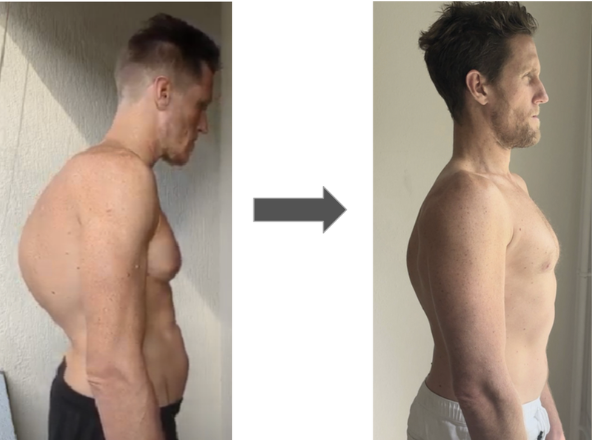
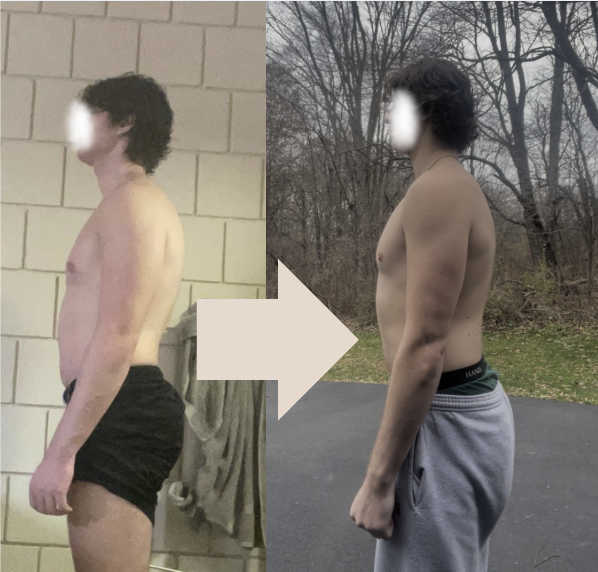
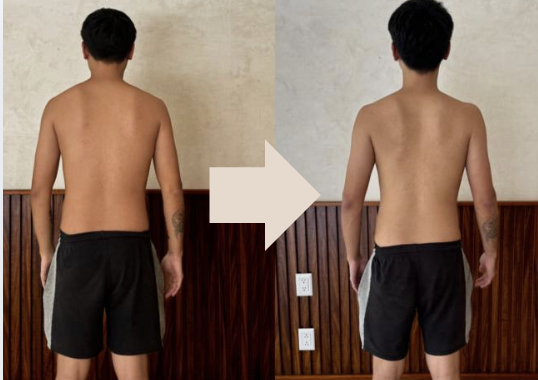
In their exact words.
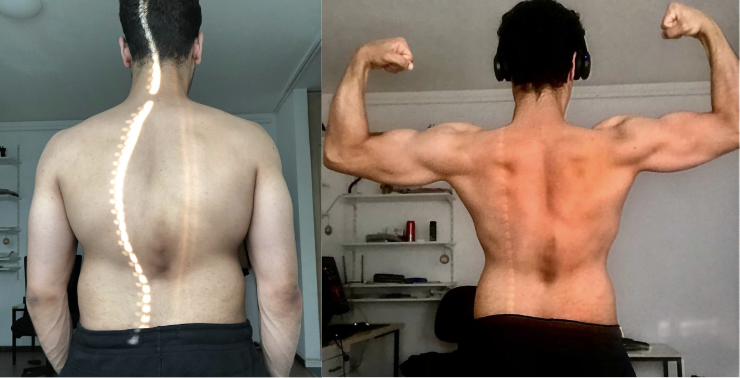
"My upper body somehow aligns and it was fantastic feeling I didn't have to stay straight or feel that twist I didn't have to do any work. It just worked."Yola. 85-degree S-curve scoliosis. Week 2.
"I definitely felt the pressure during the rocking back and forth. And I just felt like it was such a good feeling. I feel like I now have a sensation template of what things should feel like going forward. It's like the pressure makes me feel like I'm strong."Kyle. Scoliosis and stenosis. Week 2.
"I definitely am starting to notice the bowl filling out this sort of pelvic area with my breath and it just leading to all the other emotions and breaths that I'm doing, feeling like they're, it's more grounded and I'm not noticing as much pain in my low back."Sharon. Chronic low back pain. Week 3.
"I had a better time this session than last session, less back pain. And I totally noticed the feeling of pressurizing into my pelvic floor up until about the rock. And then raising from the side. I noticed my edge right there. Which is great, it's an improvement."Bill. Scoliosis since age 13. Week 2.
"This focus on this chamber can carry through into all other physical therapy that potentially one does because it's like, really going back to the basics. It's not like, oh, well, the muscle's not doing the right job. It's like the core that the chamber is not properly filled."Kami. Mild scoliosis. Week 2.
"The belief more in my hands is pretty remarkable. I've been working on the, like this is something I've worked on for years, like MDMA therapy, all kinds of therapy to try to just be able to go into the limb without these signals misfiring. My hands feels like a powerful tool. I've done a lot of things and hands feels tangibly good."Wes. Congenital amputee, CPTSD. Week 4.
"I definitely feel taller. I feel great. All these exercises I'm doing, this will benefit. As you said, all these exercises were lacking this element. So if I start with that and I feel this pressure, my exercises will just benefit."Carl. Head trauma, postural collapse. Week 4.
"My heart rate variability is much better than it was two months ago. A lot of safety in the nervous system, grounding stuff happening through the technique for sure. I'm able to feel what pressurizing is supposed to be like better. Things are definitely reorganizing."Wes. Congenital amputee, CPTSD. Week 4.
"I've noticed more ease in certain movements that I do constantly in my daily life, especially bending over for gardening. I've started to focus on where is my pressure during those and it's really changed how I've approached those activities. It started to bubble out into more than just what we've done in here and really expanded my awareness."Kyle. Scoliosis and stenosis. Week 4.
"I'm applying this pressure first and then my muscles are kicking in. I'm doing it a much easier way. It's totally changed my approach and perspective. My life is like different. I'm sitting differently, I'm walking differently, I'm thinking differently. It's just phenomenal."Yola. 85-degree S-curve scoliosis. Week 4.
"The pressure canister is such an amazing concept. With the scoliosis, I have these concave places in my body and every time I take a breath with awareness, I feel the pressure expanding those tight places. It feels like a new, novel sensation, but I feel like I'm on the right track of awareness to expand and loosen those places."Laura. Scoliosis, rib asymmetry. Week 4.
Four weeks. Floor to standing. A daily practice you own.
Week 1. Listen.
You learn what your body has been telling you. Ground contact. Breath patterns. Where your jaw holds tension. Where your eyes grip. By the end of this session, you'll understand why nothing held before. And you'll feel the difference between forcing a posture and allowing one.
Week 2. Pressurize.
You learn the missing piece. Internal pressure. The hydraulic system that holds your spine up without muscular effort. You'll feel your diaphragm organize your trunk for the first time. Most participants report this as the session where something clicks.
Week 3. Explore.
You find the boundary where your body's map runs out. The edge. You learn seven tools for working there without triggering the old pattern. And you start loading the new organization into real movement. Floor to standing.
Week 4. Integrate.
You assemble everything into an 18-minute daily practice. You learn why trying harder cancels the signal you need. And you walk out with a practice you own. Not a video to follow. A sequence you understand because you built it from the inside.
Live sessions weekly. Limited spots per cohort. New cohorts run monthly.
An 18-minute daily practice that keeps updating your nervous system for the rest of your life.
Not a list of exercises. A continuous flow from floor to standing that rewires how your body organizes itself. Every position. Every transition. Connected by breath, pressure, and awareness.
The practice takes 18 minutes because that's what the research supports. Under 10 minutes is not enough for measurable change. Over 30 is unsustainable. The daily practice is the vehicle. Your nervous system does the rest.
"I was practicing, catching my edges and different surfaces. In the car, in the restaurant. Walking on the beach. The gardening, bending all the time. Again the moment of pause and feeling the breath. It's miracle, it's really good."Yola. Week 4. Practicing everywhere.
Everything you need. Nothing you don't.
- 4 live sessions with Sam. Small group. Real-time coaching on your specific body. Not a webinar.
- The 18-minute Syntropic Daily Flow. Built with you over four weeks so you know every movement from the inside. PDF reference included.
- Onboarding assessment. Breath baseline, posture check-in, intake. Sam sees where you're starting before Week 1.
- Posture Dojo VIP membership. Full platform access. The complete movement library, weekly live workshops with Sam and guest practitioners, all future events and cohorts.
- Telegram community. Daily practice check-ins, edge logs, direct access between sessions. Co-regulation with people doing the same work.
- Immediate access. Your membership is live the day you enroll. Head start on assessments and Wednesday sessions before the cohort begins.
Your nervous system updates in weeks. Your body remodels over months.
The Syntropic Core Reset gives you the tools and the map update. That's real. You will feel different by Week 2.
But your body operates on two clocks. The fast clock is your nervous system. It updates through new sensory experience. That's what the four weeks deliver.
The slow clock is your tissue. Fascia. Connective tissue. The physical architecture that has been shaped by years or decades of the old pattern. That clock takes months. Each day of practice is a deposit. The tissue catches up.
This is why your VIP membership includes access to every future cohort, weekly live sessions, and the full community. The four weeks are the beginning. The daily practice is how the body completes the change.
The reason nothing held before is not that you lacked discipline. It's that you stopped before the second clock caught up.
$447
Limited spots per cohort.
100% money-back guarantee. Show up, do the work, and if you don't feel a profound difference, full refund. No questions.
You'll be taken to the Posture Dojo plans page. Select the VIP plan to join the cohort.
Frequently asked.
Your body isn't broken. It's running an old map.
Four weeks to feel the update. Months of daily practice to let the body catch up. A room full of people doing the same work. And a coach who has lived it.
Join the Next CohortWith love,
Sam